How PrimePet Rehab Scaled to 30 Patients a Day Without Losing Its Personal Touch
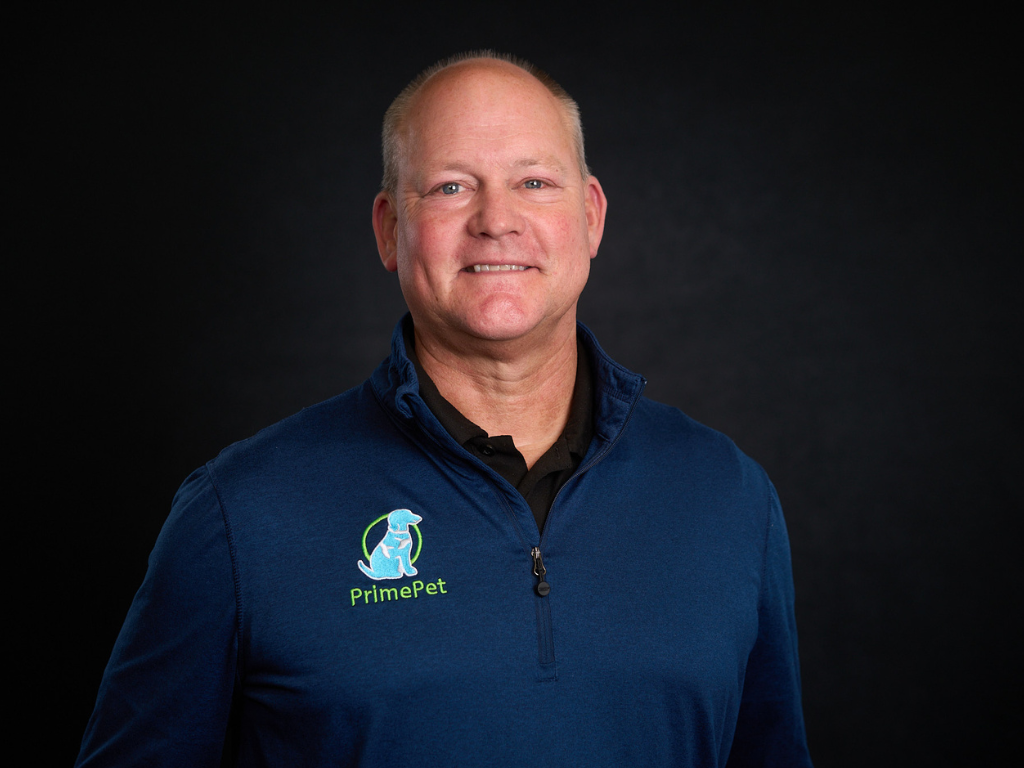
When Dr. Tom Walsh founded a pet rehab facility in Myrtle Beach, South Carolina, he set out to create something different.
A second-career veterinarian, Dr. Walsh spent years building a successful career in banking and telecommunications before returning to veterinary medicine to pursue a longtime dream.
After discovering a passion for rehabilitation medicine, he launched PrimePet Rehabilitation Therapy to fill a critical gap in care.
At the time, the nearest veterinary rehabilitation facility was nearly two hours away in any direction.
Today, PrimePet sees approximately 30 patients a day. This is a dramatic increase from the 10 to 15 patients per week Dr. Walsh was seeing when he first moved into his standalone facility just a few years ago.
Through that growth, one thing has remained constant: a commitment to personalized care, strong communication, and helping pets heal.
“Rehabilitation is probably the most rewarding aspect of veterinary medicine, in my opinion,” Dr. Walsh said.
Unlike many areas of veterinary medicine, rehabilitation allows him to build lasting relationships with patients and their owners throughout the recovery journey.
“When you take an animal who, on its first day, is scared to leave its mom at the front door, and two sessions later, it doesn’t even look back to see mom… It’s because it’s trusting,” he said.
That trust is central to everything PrimePet does. The practice was intentionally designed to feel calm, welcoming, and low stress for pets. This creates an environment where healing can happen naturally.
Dr. Walsh has also developed his own communication approach to keep pet owners engaged in the rehabilitation process, resulting in exceptionally high compliance with home exercise plans.
As the practice grew, however, the operational side of the business became increasingly difficult to manage.
When growth outpaces your systems
Like many practice owners, Dr. Walsh reached a point where the tools that once worked for his business were no longer keeping pace.
Initially, PrimePet relied on a practice information management system (PIMS) that struggled to support the unique needs of a rehabilitation-focused practice.
One of the biggest challenges involved managing treatment packages and wellness plans.
“They could never figure out wellness plans, and they never tried to figure it out,” Dr. Walsh said.
Without system support, his team had to manually track where every patient was within a package, update appointments, monitor session counts, and determine when clients were due to renew treatment plans. As patient volume increased, so did the complexity.
Financial management created another layer of administrative work.
“I had to keep a complete set ledger set like I was in the 1800s,” he said.
Because package payments, split payments, cash transactions, and checks were handled across multiple tools, maintaining accurate financial records required significant manual effort.
Scheduling also became a source of frustration. Appointment changes sometimes resulted in duplicate reminders or outdated notifications being sent to clients, creating confusion for both staff and pet owners.
Those challenges became more difficult to ignore as the practice continued to expand.
Building a foundation for continued growth
Over the last year alone, PrimePet has experienced tremendous growth. The practice now starts most weeks with a waitlist and continues to explore ways to expand capacity while maintaining the personalized experience clients have come to expect.
For Dr. Walsh, Shepherd has helped streamline many of the administrative processes that once consumed valuable time and attention.
“Now everything is integrated in, and it’s OK, he said. “That’s much better. I love that.”
Having payments, scheduling, communication, and patient information connected within a single system has reduced manual work and improved visibility across the practice.
Even more importantly, Dr. Walsh sees Shepherd as a platform that can continue supporting PrimePet as it evolves.
“This is kind of an important point for Shepherd: I’m actually growing into the system,” he said.
As his business expands its services and operational needs become more sophisticated, having software that can scale alongside the practice has become increasingly valuable.
A different kind of partnership
While workflow improvements played a major role in the decision to switch, they weren’t the only reason Dr. Walsh chose Shepherd.
What stood out most was the experience of working with a team that took the time to understand his business.
Throughout the evaluation process, conversations focused less on selling software and more on understanding the challenges PrimePet Rehab was trying to solve.
“They were interested in my business. Shepherd was the only one that was like that,” he said.
That experience continued through onboarding and beyond. Whether discussing workflows, future enhancements, or unique rehabilitation practice needs, Dr. Walsh consistently felt that his feedback was heard.
His advice to others in the pet-care space?
“Pick the one that’s going to listen to you the most,” he said, “If they’re going to listen to you upfront before you’ve spent any money, then chances are they’re going to listen to you afterwards.”
For a veterinarian who has built an entire practice around communication and trust, that kind of partnership matters.
“The transition from your own system to a system that you don’t know that well just yet. That is always the scary part,” he said.
He credits Shepherd’s onboarding team with helping make that process feel manageable and reducing much of the uncertainty that often comes with switching PIMS.
More time for what matters most
As PrimePet Rehab continues to grow, Dr. Walsh remains focused on the reason he entered rehabilitation medicine in the first place: helping pets recover, improving quality of life, and building meaningful connections with the people who love them.
He believes technology should support that mission and not get in the way of it.
“If you can simplify things and shut down a number of headaches that a [practice] owner normally would have to do, then chances are they can pay more attention to the animals they’re supposed to be treating,” he said.
For PrimePet. that’s exactly what the right systems have made possible.
Ready to see how Shepherd supports growing veterinary practices? Book a demo to explore how Shepherd helps practices streamline operations, stay organized, and spend more time focused on patient care.